
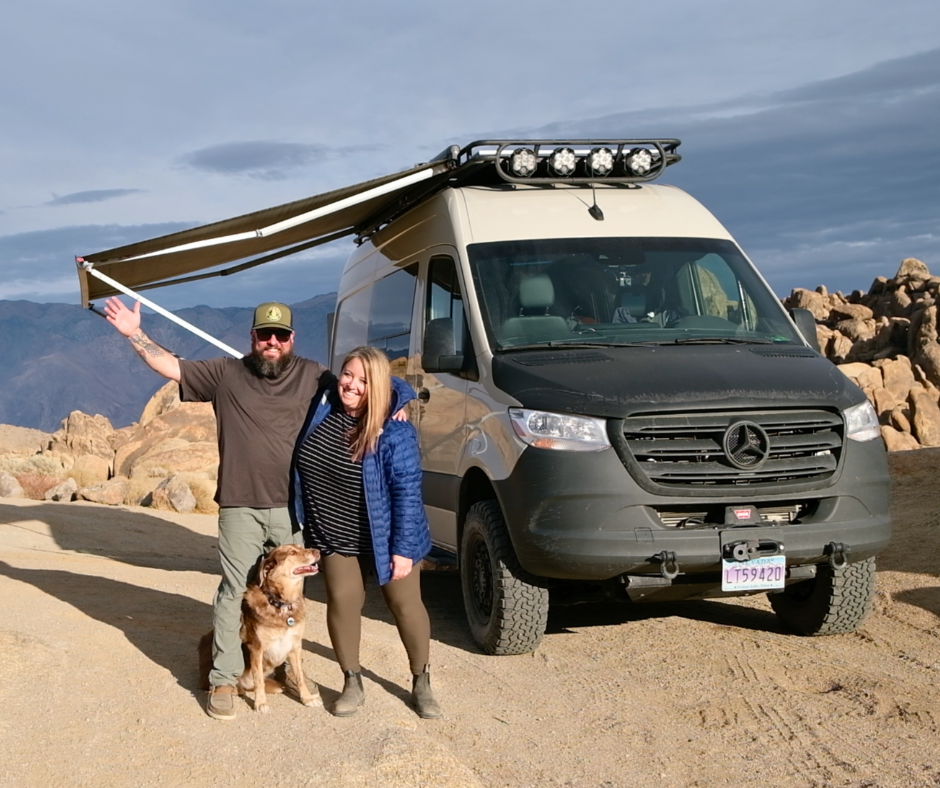
Finding incredible free campsites requires a lot of research, a little luck, and sometimes driving around aimlessly for hours. After living on the road for over a year, we often get asked how we find the free campsites that we do. In this blog post, we’ll breakdown some tips and tricks we’ve learned along the way to make finding that perfect free campsite a little easier.
Prefer to watch our YouTube video on the topic? Click on the video below:
Know Before You Go
Before you even start planning your camping trip or head out the door, there are a few things to know so you can ensure you have the best time possible.
Leave No Trace Principles
One thing that’s super important to remember is that when you’re finding free sites, they’re likely what is called “dispersed camping,” “bookdocking,” or “wild camping.” This simply means that the camping areas are not maintained, which leaves it up to all of us to do our part so we can continue to enjoy them.
The 7 Principles of Leave No Trace:
- Plan Ahead and Prepare
- Travel and Camp on Durable Surfaces
- Dispose of Waste Properly (including human waste)
- Leave What You Found
- Minimize Campfire Impacts
- Respect Wildlife
- Be Considerate of Others
Unfortunately, we’ve seen so many dispersed areas get shut down because of fellow campers disregarding the environment. If you’re not familiar with the above principles and how you can make sure places stay open for all to enjoy, you can learn more here.

Be Familiar with Public Lands
In the United States, there are several types of public land where you can legally camp for free, and each one offers a different kind of experience. We’ve summarized the different types of land below, but make sure to always check local information for regulations, permits, and camping limits.
National Forests are some of the most popular. Managed by the U.S. Forest Service, they usually allow camping just about anywhere outside of developed campgrounds. You’ll find everything from dense pine forests to wide-open meadows, plus forest roads that make it easy to tuck your rig into a quiet spot.
Bureau of Land Management (BLM) land is another favorite, especially out West. These areas are often found in the high desert, red rock canyons, and vast prairies, and offer some of the most scenic and remote spots.
There are also lesser-known places where free camping is possible. National Wildlife Refuges sometimes allow dispersed or designated free camping, especially in more remote areas, though rules vary by refuge and often restrict where you can stay.
State Trust Lands and state forests can offer free or very low-cost camping as well, depending on the state, and some will require simple recreation permits.

Know Your Local Regulations
Now that we’ve covered how to camp (Leave No Trace) and where to camp, it’s important to be up-to-date on any local regulations. These include current campfire status and permits or reservations for specific areas. These regulations can change quickly, so it’s always important to check before heading out.
To stay informed on local campfire regulations, you can usually find that information on the state or national forest websites. There will often be a post showing if campfires are allowed or if they are under a current ban and the effective dates. In certain states, like Califonia, you may also be required to have a separate campfire permit. These are quick and easy to get online with a little 5 minute test.
Like campfire permits, some areas require permits or reservations to camp. While it may seem like a pain to go through the process, this ensures that areas are not being overused and campers are accountable for their actions. These regulations can also change quickly, so make sure you check before planning your trip. There’s nothing more discouraging than driving hours to a place you think you can camp, only to find it’s now reservation only.

Best Ways to Find Free Camping
We’ve all been there, you’re looking for a great spot to call home for the night, you saw a pic online that looked promising, but when you rolled up, it looked nothing like the pic. This is where research and a lot of cross-referencing comes in. We’ll walk you through our favorite ways to find free camping below.
Best Way to Find Camping #1: Word of Mouth
One of the most reliable ways to find free camping is word of mouth. We’ve found we get our best word of mouth tips by meeting other travelers on the road or local bartenders and patrons. There’s a lot of info you can learn by talking to fellow travelers or locals. Of course you want to be tactful about it and have it organically evolve out of a conversation you’re already having. We wouldn’t just walk up to a bar and ask a bartender for their secret campsite. That would be weird and probably very unsuccessful.

Best Way to Find Camping #2: Free Mobile Apps
If you’re totally unfamiliar with an area, there are a lot of different apps these days that have some pretty good information. Some apps do require a monthly or annual membership, but we’ve found that you can generally get just as good information from the free apps.
When we get to a new place, the first thing we do is pull up iOverlander. While this app has gotten some backlash from recent changes making the free version a bit more cumbersome, you can still get all the information you need with a few more steps.
How to Use the Free Version of iOverlander
On the free version of iOverlander, you can only have one “place” (i.e., state or province) downloaded at a time. The following steps will walk you through how to navigate to different places within the app.
Step #1: Open iOverlander and hit EXPLORE from the menu on the upper left.

Step #2: On the next screen, click TAP TO DOWNLOAD PLACES to bring up a list of states/regions.

Step #3: If you already have a “place” downloaded, you’ll receive the below message. Click MANAGE PLACES.

Step #4: Under your PLACE DOWNLOADS, click the three dots next to the place you already have downloaded. Then click DELETE at the bottom of the screen.

Step #5: Go back to EXPLORE.

Step #6: Click TAP TO DOWNLOAD PLACES again.

Step #7: Click PLACES in the bottom of the screen to see the full list. Select the place you would like to download.

Step #8: Once you have downloaded the new place, all the marked locations will appear on the map.

While iOverlander is great and has a lot of sites marked, you do need to be cautious, because all of the infromation is crowd-sourced, meaning it comes from other users without any validation. We’ll get into how we cross-reference campsite information in the section below.
Other apps we’ve used are The Dyrt and Campendium. The Dyrt also has a paid version, but we’ve found that isn’t necessary. Campendium is our favorite for finding sites in Canada, especially free government recreation sites.

Best Way to Find Camping #3: Online Maps
So you’ve just found a great site on iOverlander, the reviews look good, and you saw some pics. Time to head that way, right? Not so fast. We always double check road conditions and that it’s public land with another map.
We’ve found Gaia to be the best for checking public land boundaries. Just because someone pinned it on iOverlander, doesn’t mean it’s legit, and we’ve run into this more times than we can count when we’re cross-referencing. Gaia is also starting to populate their maps with campsites. Although there are not a lot on there right now, we’ve seen more camping icons pop up in recent days and hope this will continue to improve.
We also use Google or Apple Maps in satellite view to really see the area from above. This is important because you might find that the campsite you’re considering is actually next to a place where people dump and abandon cars. That’s an instant campsite vibe killer in our books. Alternatively, you might just find some other great looking options in the area that aren’t pinned. We’ve actually done this quite a bit and it’s always fun to find your own unmarked site that’s not on any of the apps.
Also, if there’s any question about the trails, make sure to check conditions first. The campsite you’re thinking of might acutally be down a pretty rugged Jeep trail and that doesn’t mix well with most RVs. This is where onX Offroad can really shine. You can check the trail ratings to see if it’s suitable for your rig (particularly if you have a van or something bigger). When in doubt though, make sure to walk it out. There’s nothing worse than getting halfway down a trail with no where to turn around and realizing you can’t get any further. Walking trails has saved us a lot of heartache.

Best Way to Find Camping #4: Paper Maps and Books
Lastly, for all our old school loving friends out there, paper maps and books are a great thing to have. We travel with several books loaded with info on free BLM and National Forest service camping. These books list the number of sites, any amenities, and can be a great resource. These are the two that we’ve found super helpful and live in our van: BLM Camping and National Forest Camping
There are also a few areas where it’s just easier to follow along on a paper map, either because there isn’t cell service or the paper maps are more reliable. Our number one place we always make sure to have an up-to-date paper map of is Death Valley. You can stop by the visitor center there to pick one up and chat with the rangers about current road conditions.

Best Way to Find Camping #5: Our Patreon Community
Lastly, if all of this sounds overwhelming, and you just want to know where we camp, we do have our tried and true campsites, with write-ups and pics available for our Patreon members. We never put anything on there that we don’t fully believe is a great site, and there’s a lot of other exclusive content over there too.
While we still have a lot of exploring to do, we’re regularly adding to our list of campsites and will continue to build this out. You can checkout and sign up to be part of our Patreon community here: Join the Adventure Out There Crew!

Final Thoughts
Some of the most amazing campsites we’ve ever stayed at have been free. While it can take a little more work and research to find them, it’s 100% worth it in our eyes. Nothing beats the solitude, wide open skies, and knowing your able to enjoy where you are completely free.
If you have another favorite method for finding free camping, we’d love to hear from you. Leave a comment below and happy camping!
Affiliated Disclaimer: As a quick heads up, some of these links are affiliate links. If you choose to use them, we may earn a small commission at no extra cost to you. We only recommend products we use ourselves and love. This helps keep us on the road and making content. We appreciate your support!
Leave a Reply